Brand:Kenmore Model Number:665.13209N411 Main Symptom:Bottom door leak What happens & when:**Main Symptom:**massive leak across bottom of front door What happens & when: inspected water valve and hoses, bottom of pump, all dry, used 18 minute quick rinse cycle for testing. At 9 minutes when draining began, massive leak across all of door bottom. No change in level over the years. I assume a door gasket is constant drip and not a gusher, but gasket seems ok. When I pull up on the float I can hear a very faint click, so I think the float switch is working mechanically, don’t know if it works electrically. There is no gasket strip on the inside bottom of door as some models have.
Error Code (if any):none
Parts or tests already tried:inspected fill valve, hoses, and bottom of pump, all dry. Drains ok in disposal to sink drain.
Photos / video link:
Interesting question. I believe it occurred as soon as drain started, but it was such a large amount that I was wiping and opening the door. Can you tell me what either would mean?
This may be a couple of things. Was the tub full of water when you lifted the float? Also, does the leak stop if you turn the water supply off as soon as it starts?
The only time I pulled up on the float was when the tub was empty, just to check if it was binding. I don’t know what position the float would be in while the leak is happening, too busy wiping up water. Similarly, There is so much water that I can’t try to turn of water while it is leaking, have to open the door to stop it. Does the leak stopping when I open the door help? My guess is the water would still leak. Please explain what you are thinking as the leak cause.
The water stopping when the door is opened does help. It identifies the issue occurring only when electricity is applied to parts. A mechanical failure in the valve would still leak regardless of the door position. If the float is able to move up and down freely, has the test been done while the dishwasher was empty? I am trying to make sure there are no chances of it being that the circulation pump was running rather than the drain pump and that there were no obstructions that might have stopped the lower spray arm from rotating properly.
When I tested after the first leak, I did so with it empty. The leak occurred at 9 minute mark of the quick rinse cycle. No obstruction to block spray arm. No detergent.
I don’t see obvious cracks in the spray arm housing.
Am I correct that a door gasket leak would be constant if the washer was spraying to the defect, and that it would be a dribble on the side rather than a waterfall all across the bottom?
Could there be an electrical break in the float switch, or would the leak continue when the door was opened?
You are correct about the door gasket. Regarding the float switch, the float would only be a concern if it did not lift up and drop down freely. The switch it engages opens when the float is lifted and opens the voltage circuit to the valve. Is it possible that the motor being heard is the circulation motor and that it might be spraying water through the turbo jets? If this is a possibility, it would explain the waterfall leak which may also point to the dishwasher overfilling just enough to activate the float.
The turbo spray is only activated, I think, if I select the turbo deep clean option. Should not be activated on the quick clean 18 minute cycle. How plumb must the front to back level be? It’s extremely close, maybe 1mm at most off the center bar on the level front to back, perfect side to side. This is the way I remember it from repair 3+ years ago, so I doubt it changed. What do you recommend now?
I think the most important thing at this moment is verifying that it is the drain pump and not the circulation pump that is operating when the leak occurs. Due to how the drain pump operates and where it is located, it should not cause water to leak out like a waterfall (although anything is possible under the right circumstances). The level of the dishwasher being within that range is perfectly fine. I’m wondering if this might not be a case of overfilling from the main control sending voltage for too long and then an improper cycle operation due to a failure in the program. It is something I would want to verify every little operation occurring before I say anything definitively.
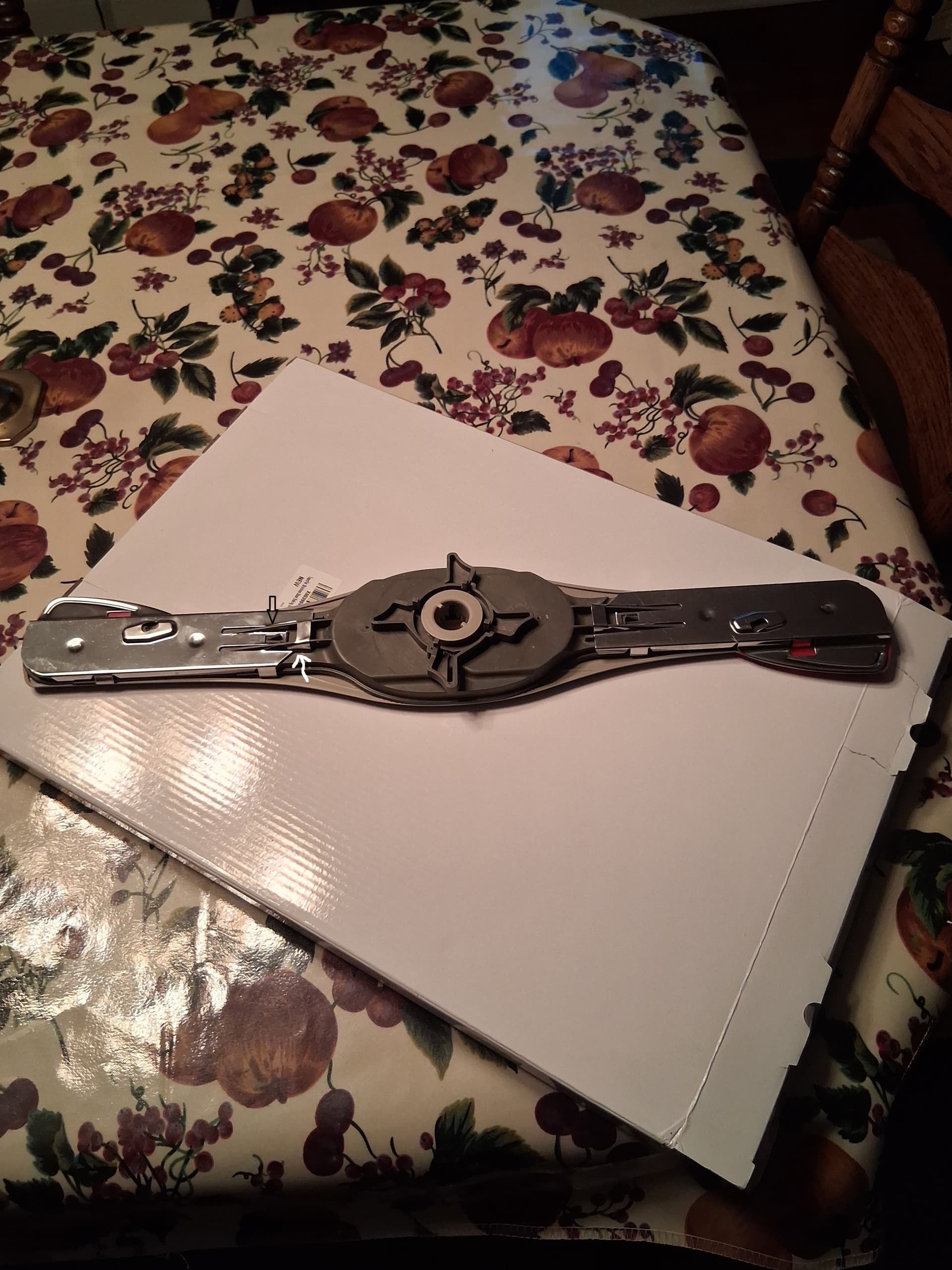
Is there a trick to confirm leak or crack in the lower spray arm? I guess water only exits thru the holes. Can I confirm leak by hose into center hole or submerging in water to see bubbles? Don’t want to buy one if not the problem.
Also, isn’t there an electrical on/off switch for the float that could fail, even though the mechanical rod is moving when the float elevates?
Removing the lower spray arm and visually inspecting it would be the easiest way to identify if there is a crack. Regarding the float switch, it can fail in a closed position. However, if that were the case, the dishwasher would overfill at the beginning during the initial fill cycle and any time the dishwasher calls for water.
I have read that the lower spray arm can be checked by immobilizing it in the 12/ 6 o’clock position to see if it still leaks. Do you think that is worth trying and not harmful?
While not harmful, it would not be a way of verification. Placing the spray arm in a 12 to 6 position would cause a leak if there were a crack. On that same note, if there is something else causing the leak, this would not eliminate the spray arm as a possibility.
When I fill arm with water, water leaks (see arrows) where chrome meets plastic, only on the left, not on the right. Is this the culprit?
Regarding immobilizing the arm at 6/12, I am think that if the arm doesn’t rotate, then the turbulence is sideways and not forward to the door. Am I wrong? Just wanting to double check with you. thanks.
The direction of turbulence when setting the spray arm at the 6 to 12 position is very dependent on what is occurring with the spray arm. The spray arm should not leak from there and this would certainly cause the issue. From what I can see, it looks like the new spray arm for this model has been revised. WPW10491331 Spray Arm | Genuine Whirlpool OEM In Stock
Well, I decided to test further. I placed the spray arm in the 6/12 position, closed the locking tab, and used string to tie the arm front and back to the tines of the bottom rack. Started up the 18 minute cycle that I used to test originally. Almost immediately the waterfall from the door bottom started. Originally it didn’t leak until 9 minutes of the 18 minute cycle. The door was completely closed or the unit would not start. I thought what would happen to confirm the arm was the culprit would be no leak due to less turbulence and perhaps the jet going sideways rather than toward the front. Does this result make sense to you and still implicate the spray arm as leaking?
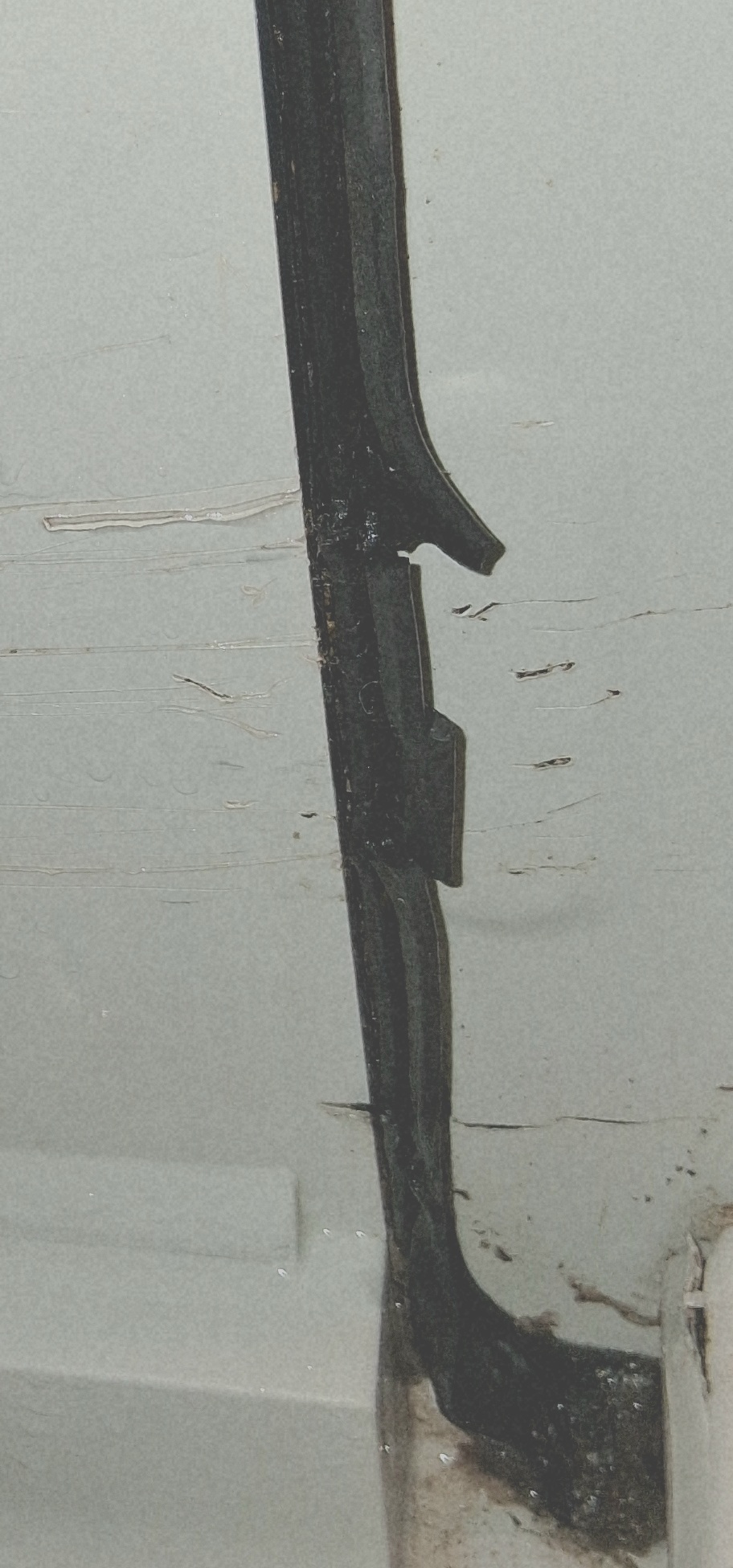
. Leak is still there, gushes out the bottom of the door at 9 minutes of the 18 minute quick rinse. I stopped it by opening the door, activated drain until complete, started cycle from the beginning again and the leak occurred immediately at the bottom center door. The right corner insulation behind the door is wet, the left is not. I have taken a pic of the door gasket on the right side where there is a tear that was dismissed by repairman years ago, and it looks the same but hasn’t leaked, unless it is the source now.
Seems to me that a door gasket leak would be constant and start at the right corner as a drip, not a gusher from the center after 9 minutes. It’s as if water is collecting at the bottom of the door until it overflows. That could explain the delay in leak when dry but an immediate leak when I restart after the leak occurs. Am I wrong?
This unit does not have a seal on the door bottom.
The float is not sticking when I touch it and I hear a faint click when I elevate it. I assume there is an electrical switch activated to stop water level from getting too high. Can the electric part be stuck while the mechanics works?