Brand: General Electric Model Number: GFSS6KKYASS Main Symptom: refrigerator and freezer area wont cool What happens & when: When plugged into the wall, system does not cool down. The compressor gets progressively hotter, very warm but not too hot to touch. there is a faint clicking noise coming from the back lower part of the unit. I want to make sure that the $100 i spend on the replacement compressor start PTC relay will fix the unit. What am I missing, if anything?
Error Code (if any): none
Parts or tests already tried:
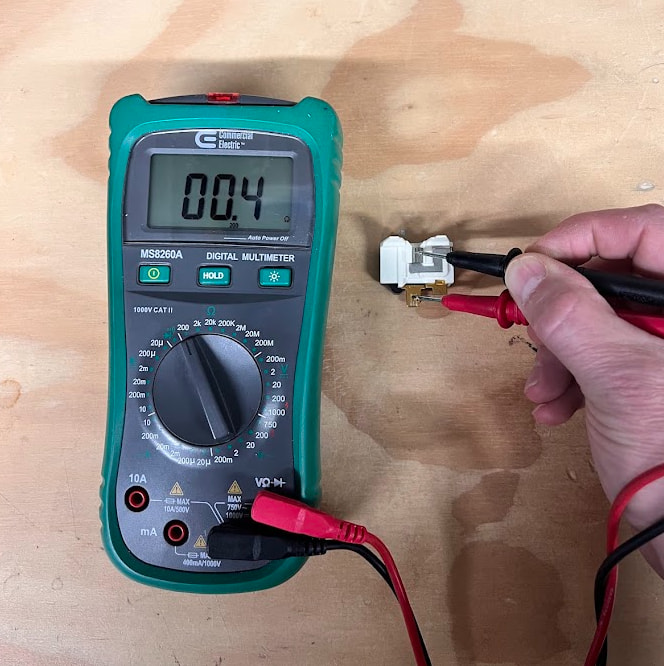
passed - electrical resistant test of thermal overload device (low resistance of 0.4 ohm, see photo below)
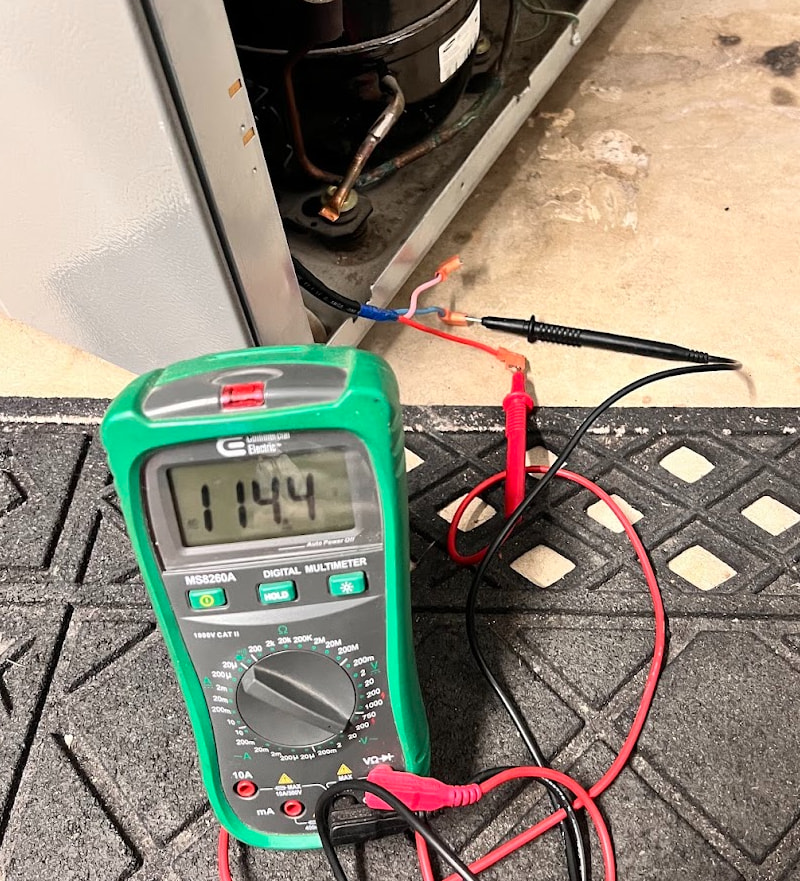
passed - compressor resistance across the three prongs (all add up correctly, C to S was 9 ohm, C to R was 3 ohm, and S to R was 12 ohm)
passed - no shorts measured from compressor pins to the chassis (open loop)
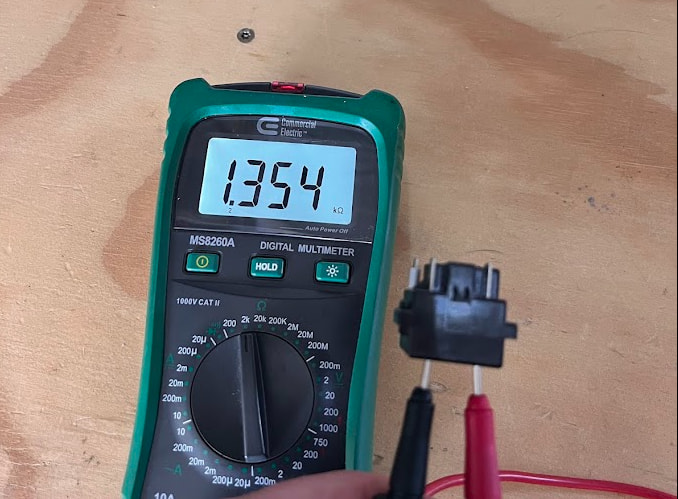
presumed failed - room temperature resistance across compressor start PTC relay (high resistance of 1.3 kohm, see photo below, should be 3-15 ohm)
Your testing points toward the start circuit, but I would not spend $100 on the PTC relay solely because it measures 1.3 kΩ.
For the GE GFSS6KKYASS, the symptoms—no cooling, compressor getting progressively hot, and periodic clicking from the compressor area—are consistent with the compressor trying and failing to start. Your compressor winding readings are internally consistent: C-R = 3 Ω, C-S = 9 Ω, and R-S = 12 Ω, and no winding-to-ground short is a good sign.
The important catch is the PTC measurement. A PTC starter’s resistance specification depends on the exact device and how/where you’re measuring it. I wouldn’t assume that 3–15 Ω is the correct specification for this refrigerator’s relay without confirming the service data or exact part.
Before ordering anything, I’d do these checks:
Verify voltage at the compressor/start device. When the refrigerator calls for cooling, you should have approximately 120 VAC supplied to the compressor start assembly. If 120 V isn’t reaching it, replacing the relay won’t solve the problem.
Identify what is actually clicking. If the click is the compressor overload opening, followed a while later by another click as it resets, that’s classic evidence of a compressor that isn’t starting.
Inspect/test the complete start device. A bad PTC relay or overload can absolutely produce your symptoms. If the PTC is cracked, rattles when shaken, is discolored/burned, or its measured behavior is demonstrably outside the specification for that particular part, replacement becomes much more compelling.
Don’t rule out a mechanically locked compressor. Your resistance tests establish that the compressor windings aren’t obviously open, shorted to each other, or grounded. They do not prove that the compressor can physically start. A locked rotor can pass every resistance test you performed and still click the overload repeatedly.
The most useful next test is an amp-clamp measurement on the compressor common lead during the attempted start. If current immediately shoots close to the compressor’s LRA (locked-rotor amperage) and then the overload clicks open, the compressor is failing to start. A known-good start device can distinguish a failed starter from a mechanically locked compressor.
So I’d put the diagnosis at:
120 V not reaching start device → control/wiring problem 120 V present + defective start device → replace start device 120 V present + known-good start device + compressor pulls LRA and trips overload → bad/locked compressor
Given that a compressor replacement is dramatically more expensive than a starter, testing the starter is worthwhile—but 1.3 kΩ by itself isn’t enough evidence for me to tell you the $100 part will fix it.
If you give me the part number printed on the PTC/start relay (or a clear photo of its markings), I can check the expected resistance/test procedure for that particular device and tell you whether your 1.3 kΩ reading actually condemns it.
For GE WR07X10112, the compressor PTC start relay, GE does not publish a specific ohm/resistance specification. GE’s own parts listing gives no electrical test value, and AppliancePartsPros specifically reports that the manufacturer provides no PTC resistance spec.
Recommended check: with the refrigerator unplugged and relay removed from the compressor, check the PTC for continuity. An open/infinite (OL) reading indicates a bad relay.
At room temperature (approx. 77°F / 25°C), a functional PTHTM 100MD refrigerator PTC start relay should read between 4 to 15 ohms across its primary active terminals