No Heat Repeated Burnt Wires and Failed Timer: What's Causing This?

Please make sure to click on General above and select the correct appliance type first.

Brand: Speed Queen
Model Number: ADE30RGS171TW01
Main Symptom: not heating
What happens & when: suddenly

Speed Queen ADE30RGS171TW01 — Repeated Burnt Wires and Failed Timer: What’s Causing This?

Hi! I’m hoping for some advice before installing a new timer and wiring harness.

Previous problem: About 11 months ago, a wire connection burned at the heating element. A technician charged $300 for a repair that lasted only two weeks. I eventually repaired it myself using high-temperature connectors and replaced the heating element. I suspect the original problem was a loose connection or improperly rated wire.

Current problem: The orange wire connecting the Fabric Selector to timer terminal H burned severely. The thick red wire at L2 also appears heat-damaged.

Multimeter testing (dryer unplugged):

  • Fabric Selector: Regular: L1–2; Delicate: L1–1 and L1–2; No Heat: L1–3. These appear to match factory specifications.
  • Timer H to L2: No continuity (OL) at 40 and 60 minutes on Time Dry and at More Dry on Automatic. Both wires were disconnected for testing, but other timer wires remained attached.
  • T to L2: No continuity.

The dryer was drying efficiently before the failure. The dryer and exhaust vent are clean, with no extended drying times.

Replacement: A genuine Speed Queen timer conversion kit with a new wiring harness, believed to be part D519030.

Electrical supply: Other dryers previously worked on this outlet without problems. I also discovered that my dryer is connected to a NEMA 10-50R (50-amp) outlet, but the circuit breaker is 30 amps.

I have a Klein MM325 multimeter and was considering checking the outlet voltage myself.

Is there a safe way for a homeowner to test this outlet, or would you recommend having a qualified electrician do it?

Could an issue with the outlet or electrical supply contribute to the repeated burnt-wire connections in my dryer?

Thank you for your advice!

My questions:

  1. Could failing internal timer contacts have caused the orange wire to burn, or is a loose connector more likely?
  2. Could the earlier heating-element wire failure and current timer failure be related?
  3. Should I test or replace the heating-element thermostat before installing the new timer?
  4. Are there any other electrical connections or components I should check to prevent another failure?

I’m trying to identify the underlying cause before installing new parts. I’d appreciate your expertise. Thank you!
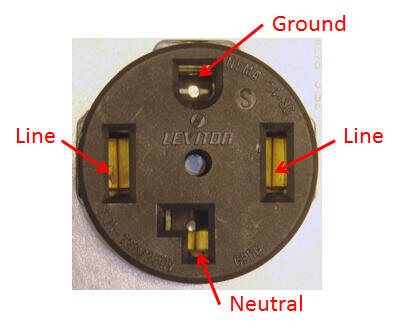
Failing timer contacts and loose connections can both contribute to that wire failing, but from the looks of that kit, that wire seems like it would have been replaced when the timer conversion was done. Correct me if I’m wrong there.

The heating element issue could also be a factor, but if that was also replaced at roughly the same time or before the timer and harness it seems unlikely.

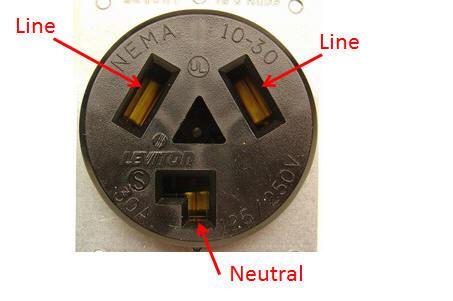
Overvoltage can do this and it is possible for you to test the outlet safely. You want about 240v line to line or leg to leg, 252v starts cooking things. Each line or leg to neutral and ground should be about 120v with an upper limit of 126v. So if the combined voltage of the 2 legs is 252v or greater, or either single leg to neutral and/or ground shows 126 or more then you’ve got a source electrical issue that should be addressed by an electrician.

I’ve attached some pictures below for reference depending on which style outlet you have:

Line to Line should equal about 240v.

Each Line to Neutral or Ground should equal about 120v.

Line to Line should equal about 240v.

Each Line to Neutral should equal about 120v.

Hi Rory, thank you for your response!

Just to clarify, I haven’t installed the timer conversion kit yet. I am wondering if I need to buy this D519244 kit, after I confirm compatibility and figure out what caused the repeated burned wires. I’m hoping I don’t have to install all those wires. Can I buy a used timer and the orange and red wires?

The original heating element is back in the dryer and tested good. The fabric selector also passed its continuity tests.

I tested the original timer for continuity between H and L2 in several heating positions, and consistently got OL.

I’m planning to check the outlet voltage as you suggested.

Given those findings, do you think a failed timer contact or a loose terminal connection is the more likely cause of the burned orange wire? And would you recommend any other checks before installing the conversion kit?

Thanks again for your help!

Ah, that clears things up. Yes a loose connection could cause the issues with the timer and the wiring, and a bad timer contact could cause the wire failure. I’d suspect that the loose connection damaged the wire which in turn damaged the timer over time, but there’s no way to confirm that absolutely. It sounds like you’ve made all the proper checks, just make sure to check that outlet before replacing the timer and harness.

The timer kit D519030 is what the manufacturer is showing as the correct replacement for your model and I would use the entire harness that came with it.

FB22-15R2 Service Bulletin Replacement Kits for Kingston Dryer Timers.pdf (190.0 KB)

Hi Rory,

Thanks again for all your help. I have another concern I’d really appreciate your opinion on.

After reading the installation instructions on the manufacturer-recommended D519030 three-cycle timer conversion kit for my Speed Queen dryer (ADE30RGS171TW01), I discovered that the replacement Robertshaw timer (D518966) must only be turned clockwise.

I’ve also come across reports from owners who accidentally turned these replacement timers counterclockwise and damaged them. Some reported that the timer stopped advancing and the dryer continued running for hours without shutting itself off.

This concerns me because it’s so easy for someone unfamiliar with the dryer to turn the knob in the wrong direction.

I’m wondering:

  1. Is this a known problem with these Robertshaw replacement timers? Have you encountered failures caused by turning them counterclockwise?
  2. What actually happens internally when the timer is turned backward? Could it cause the dryer to continue running instead of shutting off automatically?
  3. Is there a compatible alternative that can safely be turned in both directions? I’d especially be interested in finding an unused original Kingston timer if one is still available.
  4. If there isn’t an alternative, is there any way to prevent someone from accidentally turning the replacement timer backward?

I’m hesitant to install something that could potentially be damaged by such a simple mistake.

I’d really appreciate your experience and recommendations before I decide how to proceed.

Thank you again!