Have you recently switched from natural gas to LP (propane), or vice versa? Have you replaced any of the burner orifices?
An obstructed or improperly adjusted air shutter on the oven burner tube can restrict airflow, creating an improper air-to-gas mixture. This can cause unusually high flames, yellow flames, or soot buildup. I’d start by checking that the correct orifices are installed for your gas type and making sure the air shutter is clean and properly adjusted.
The stove has always used propane. The air shutter setting was not changed from the original. The burner assembly including the air shuttle were clean and free of any obstruction. The valve I received was for use with propane
Okay, I just wanted to make sure so we could narrow it down. Since the appliance has never been converted between natural gas and LP, it sounds like the gas regulator may have failed.
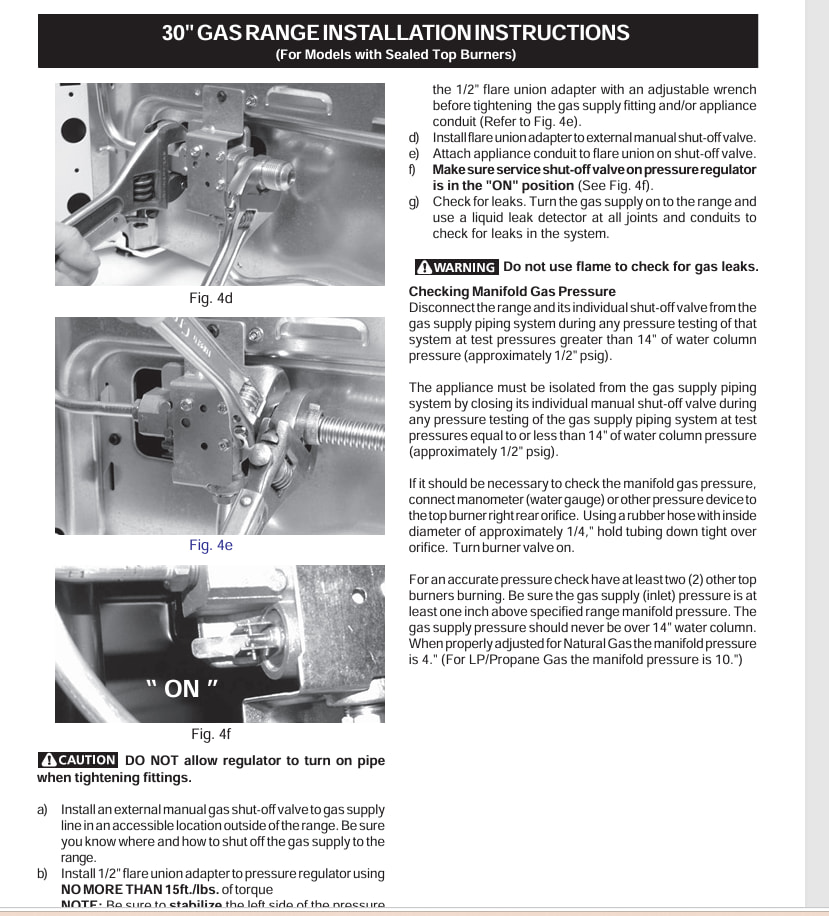
A faulty regulator can cause an improper gas flow, which can lead to unusually high flames, yellow flames, or soot buildup. Based on what you’ve described, I’d recommend inspecting or replacing the regulator as the next step.
I removed the bottom of the oven to see the oven burner when it is light. It does appear to be excessive pressure because the flame has a gap of about 1/4" before the gas lights. It also produces a slight whooshing sound. The top burners light and sound normal as expected. What next??
If the problem is only affecting the oven, check to make sure the brass orifice hood hasn’t loosened.
Unplug the stove and turn off the gas supply.
Remove the oven bottom panel and the flame spreader to access the burner.
Locate the brass orifice hood at the back of the burner tube.
Using a 1/2" wrench, make sure the orifice hood is snug by turning it clockwise.
If it turns easily, it may have backed off over time. A loose orifice hood can allow too much gas into the burner, causing unusually high flames. Tightening it may resolve the issue. Let me know what you find.
Take a close look along the sides of the long oven burner tube. If spilled food, grease, or soot has clogged the burner ports—especially near the igniter—gas can build up and then ignite through the remaining open ports. This can create an irregular, oversized flame or a large flame pocket.
Try cleaning the burner ports with an old toothbrush or a small stiff wire, making sure all of the holes are clear. Once they’re clean, test the oven again and let me know if the flame pattern improves.
Everything was thoroughly cleaned before assembly. All long burner tubes openings are clear and clean.
The igniter was recently replaced and new. The oven was never used since then.
I don’t believe the stove has an orifice hood as you described.
There is no 1/2" brass fitting at the back of the burner tube. The burner tube is one piece that is bent down to the adjustable air shutter which is fitted into the safety valve gas brass inlet. The air shutter was not touched and has the original setting.
I have to leave in a few minutes. I followed your instructions and everything checked out. I need your professional direction for the solution. I’ll be back early this evening.