Brand:GE Model Number:GFE28GSKBSS
**Main Symptom:**top shelf gets up to 53 degrees What happens & when:top shelf temperature fluctuates between 35 and 50 degrees (up to 55 degrees)
Error Code (if any): none
Parts or tests already tried: replaced temperature sensor (WR55X10025) in ceiling of refrigerator
Photos / video link:
If the top shelf is reaching 53°F but the middle and lower shelves stay cold, that usually means you have an airflow problem in the fresh-food compartment, not a sealed-system or compressor problem.
For your GE GFE28GSKBSS, the most common causes are:
Fresh food evaporator fan not running properly
This fan circulates cold air throughout the refrigerator section.
When it slows down or stops, some shelves stay cold while the top shelf warms up significantly.
Frost buildup around the evaporator cover
Ice can restrict airflow, causing warm spots in the fresh-food section while the freezer still works normally.
Quick checks
Open the refrigerator door and hold the door switch closed.
Listen near the back wall of the refrigerator section for a fan running.
Feel for airflow coming from the upper vents.
Check whether items on the top shelf are blocking air outlets.
Look for frost or ice buildup on the rear interior panel.
Questions
Is the top shelf warm all the time, or only after the doors have been opened frequently?
Do you hear a fan running inside the refrigerator compartment when the door switch is pressed?
Can you access the fridge evaporator and send a picture
Based on your answers, I can tell you whether you’re likely looking at the fresh-food evaporator fan motor, a damper assembly issue, or a defrost/ice buildup problem.
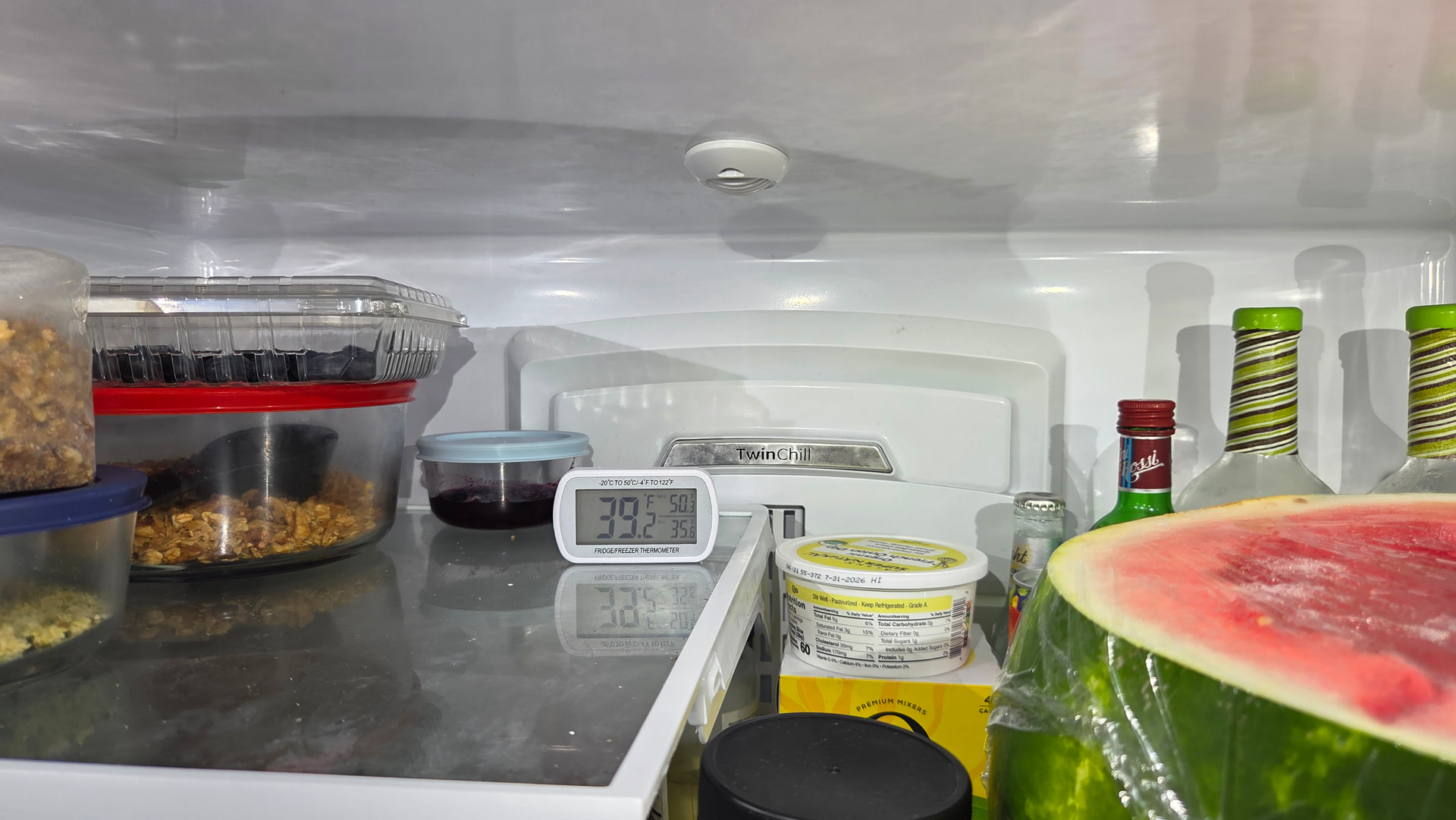
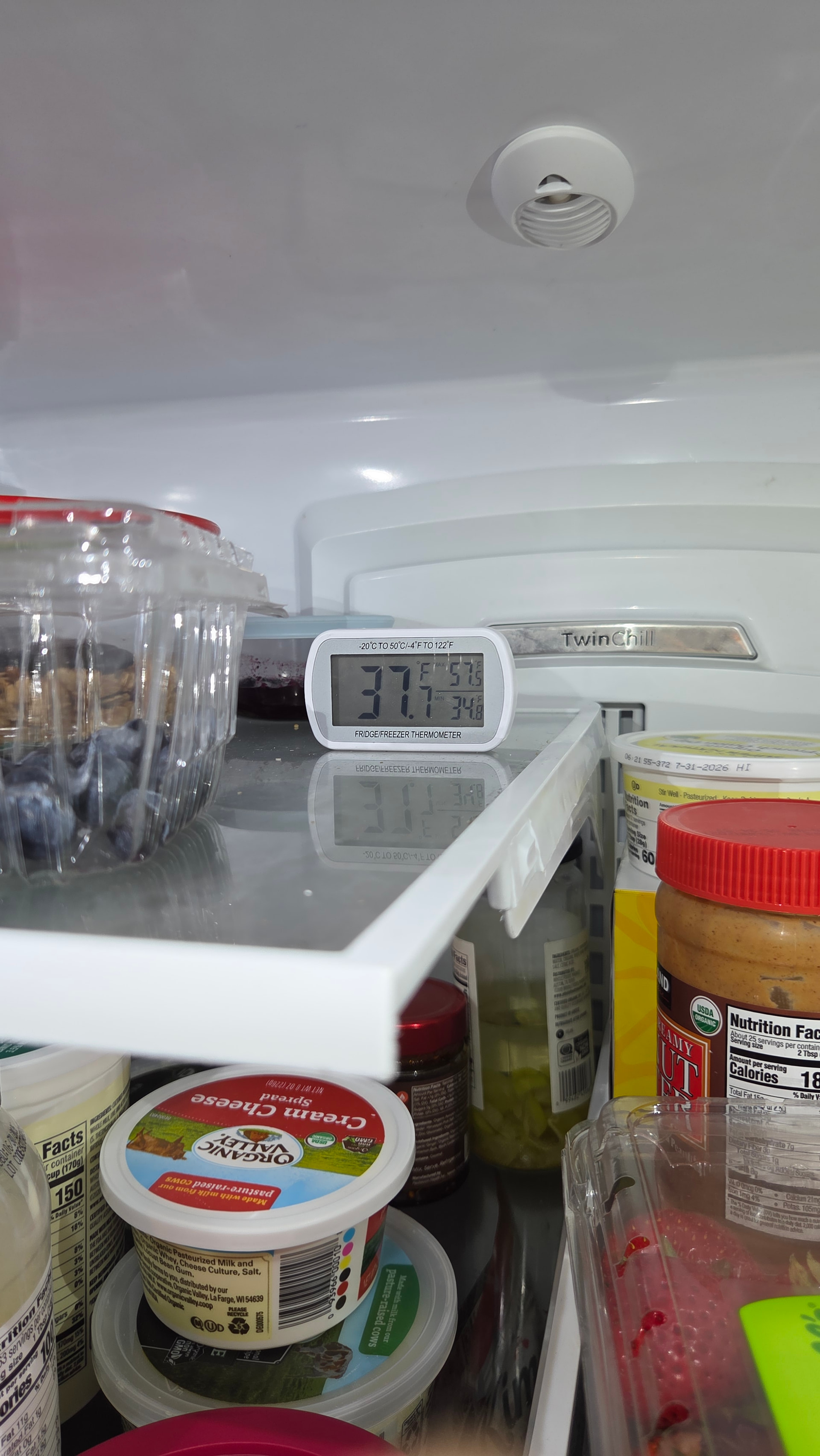
The top shelf being warm is intermittent, but occurs once or twice a day. The thermometer in the pictures show current, max and min temperatures. I was resetting the max/min daily so I could see how often the issue occurred. Seemed to only go above 50 degrees once or twice a day. I haven’t seen a correlation between the doors being opened and the temp going up to 50+ degrees.
3 days ago, the current, max, min temps were 39, 50, 35. The latest picture I am attaching shows 37, 57, 34 (no reset in between). The fridge is set at 37 degrees.
I didn’t hear or feel a fan blowing earlier today but I did just now when I checked.
I don’t have access to the fridge evaporator now. I can tell you that I did replace the fridge evaporator fan a few years ago. The symptoms then were warm temp with freezing of foods in the bottom climate zone fridge drawer. When I put the thermometer in the climate zone drawer now, the temp range is 34-37 consistently.
The only other thing I can think of is an airflow issue. If you’re getting strong airflow from the vents, nothing is blocking the intake or exhaust vents, and the rest of the refrigerator is maintaining consistent temperatures, I would suspect that the fresh food section may be overcrowded and preventing proper air circulation.
Try rearranging or reducing the number of items in the refrigerator, paying close attention to the areas around the air vents. Adequate space around these vents is important to allow cold air to circulate evenly throughout the compartment. Once airflow improves, monitor the temperature to see if the issue is resolved.
Right now it is 44 degrees on the top shelf and no fan is running.
Also, it was 41 degrees last night before we went to bed and this morning the max temp registered by the thermometer was 55 degrees without opening the doors. Current temp was 37 degrees when I checked this morning.
It is able to cool most of the time, but sporadically it stops cooling.
I think the temperature spikes you’re seeing may be the result of heat rising from the evaporator defrost heater. Since heat naturally rises and that shelf is located so close to the top of the refrigerator and near the very top vents of the evaporator, each time the defrost element activates, the cooling system and fans shut off. As a result, some of that heat can become trapped in that area until the refrigerator resumes cooling and the fans turn back on, allowing the air to circulate again and redistribute the temperature more evenly.